
AC Maintenance & Tune-Ups in Port St. Lucie, FL
Maintenance in this climate is not a formality. Systems here run far more hours than the national average, the air is humid and salt-influenced, and condensate drains stay wet enough to clog. Many mid-summer failures are visible months earlier to anyone who inspects the system.
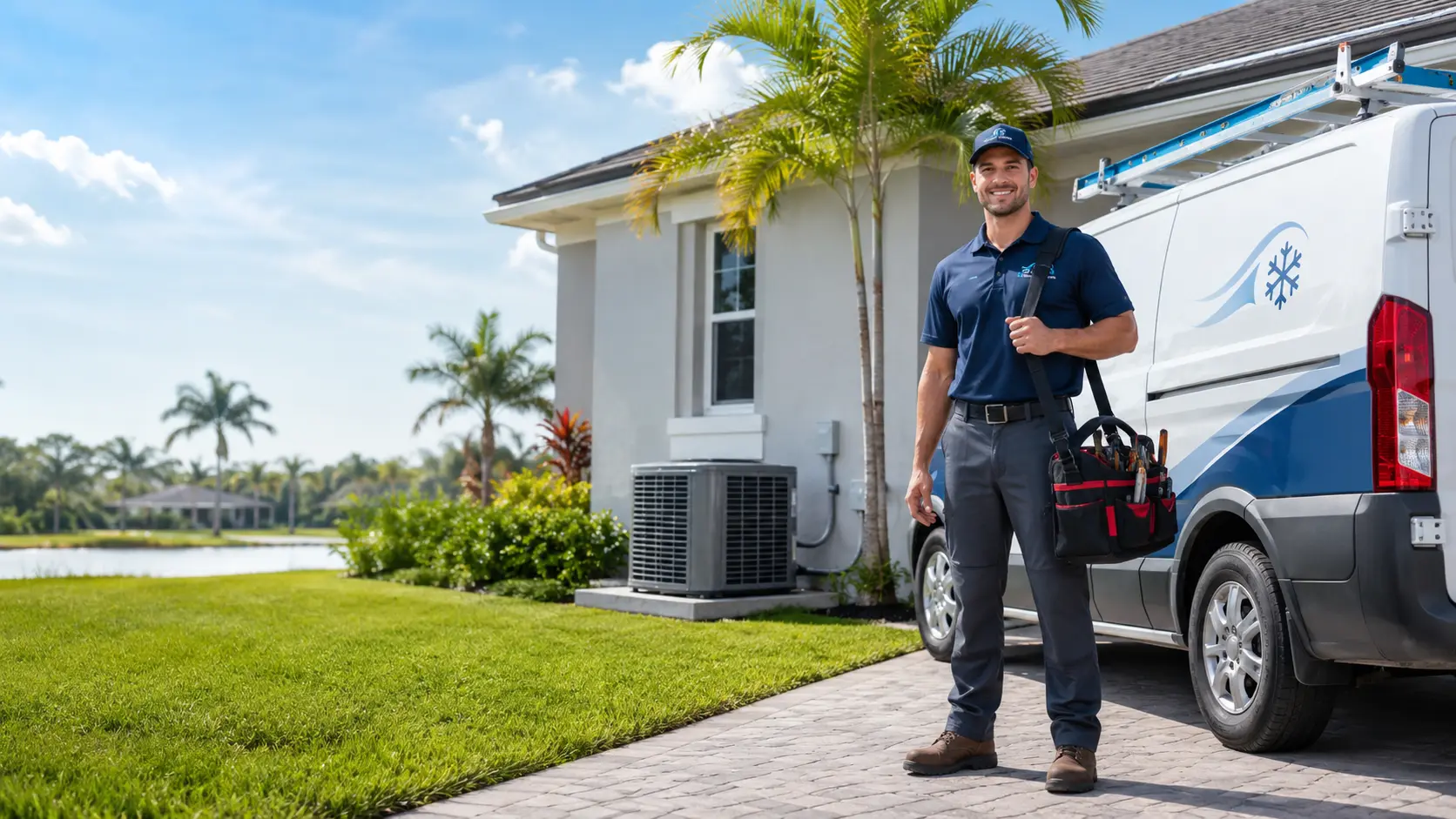
What a maintenance visit typically covers
- Rinsing and inspecting the outdoor condenser coil, including fin condition and corrosion
- Inspecting and cleaning the evaporator coil and blower wheel where accessible
- Clearing and flushing the condensate drain line and verifying the float safety switch
- Measuring capacitor values, contactor condition, amp draw and voltage
- Verifying refrigerant performance through pressures and superheat or subcooling
- Checking temperature split and static pressure, and documenting the readings
The condensate drain problem
In humid Port St. Lucie air, a residential system can remove gallons of water from a house per day. That water carries dust into a drain line that stays permanently damp, and biological growth plugs it. A plugged line either trips a float switch and stops cooling or overflows into the ceiling. Clearing it takes minutes; repairing a ceiling does not.
Best time of year
Late winter and early spring, before sustained heat, is the practical window. Scheduling is easier, and any part that needs replacing is handled before the system runs twelve hours a day.
Frequently asked questions
- How often should AC be serviced in Florida?
- Once a year at minimum. Systems near the water, running heavy hours, or in homes with pets often benefit from twice.
- How often should the filter be changed?
- Every one to three months depending on filter type, pets and run hours. In peak season, check monthly.
- Does maintenance actually prevent breakdowns?
- It cannot prevent every failure, but coil cleaning, drain clearing and catching a weak capacitor early address the most common causes of summer no-cool calls.