Air Conditioning Repair in Port St. Lucie, FL
When a cooling system quits in Port St. Lucie, indoor temperature and humidity climb quickly. A thorough air conditioning repair visit generally begins with a full diagnostic of the outdoor condenser, the indoor air handler, the thermostat and the electrical path between them, so the repair addresses the actual fault rather than the symptom.
Submit a request on this page or call to describe the problem. Requests are routed to a qualified local HVAC professional, who confirms scheduling, diagnostic fees and pricing directly with you.
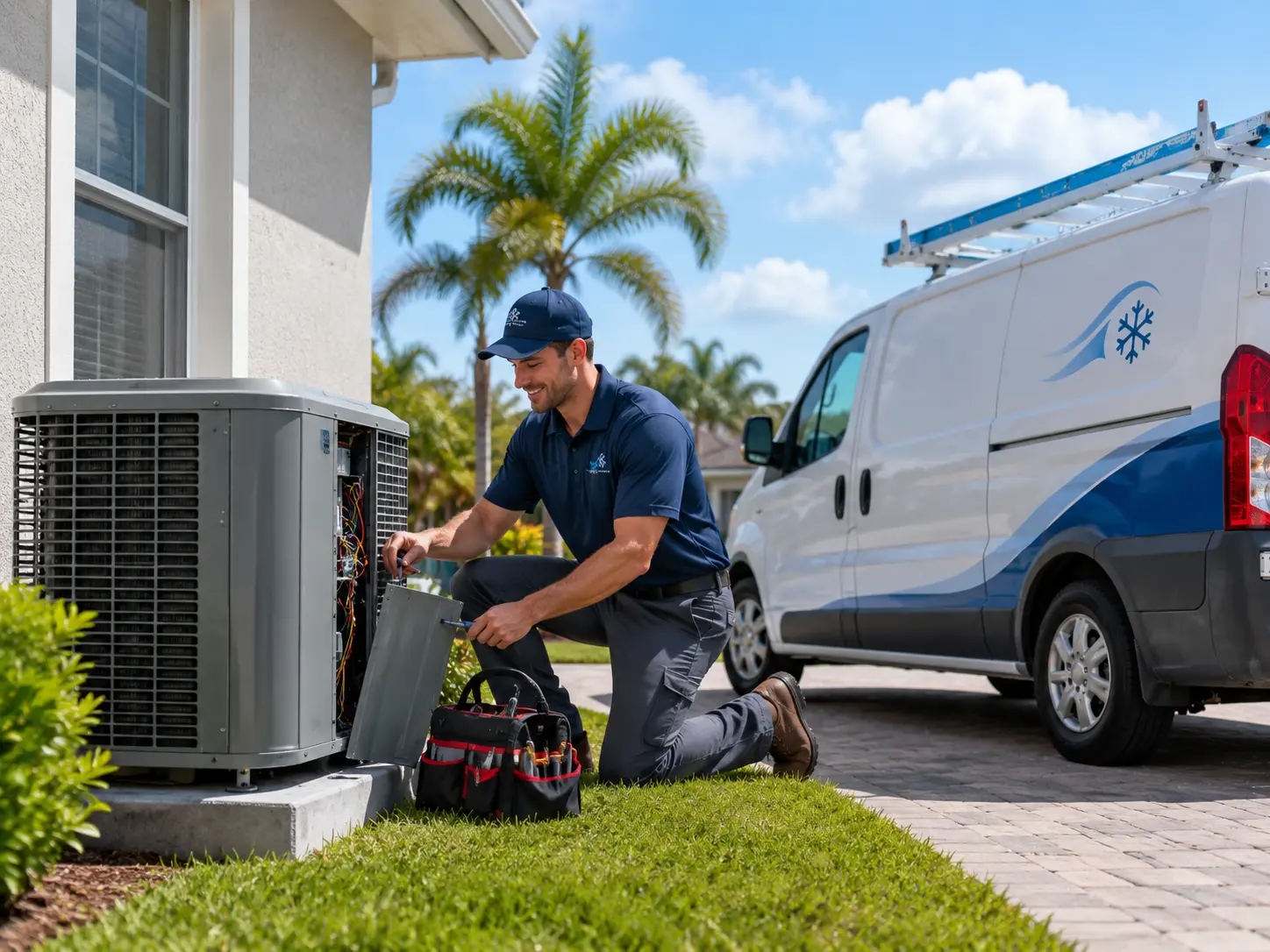
What a complete AC repair diagnostic covers
- Thermostat and control verification, including the call-for-cool signal at the air handler
- Electrical checks: breakers, disconnect, contactor, capacitor and wiring condition
- Refrigerant pressure with superheat and subcooling readings to judge charge and restriction
- Airflow inspection: filter, blower wheel, evaporator coil and duct static pressure
- Condensate drain and safety switch check, a common cause of shutdowns in Florida
- A clear explanation of the findings and repair options before work begins
Repairs most commonly needed in this area
Most no-cool calls in coastal Florida fall into a handful of categories: failed run capacitors and contactors, clogged condensate lines that trip the float switch, low refrigerant caused by a leak, dirty coils that limit heat transfer, blower motor and control board failures, and thermostats that have lost power or calibration.
Compressor and coil replacements are less common but do occur on older equipment. When a repair approaches the cost of replacement, it is reasonable to ask the servicing contractor for both numbers before deciding.
Why AC systems work harder on the Treasure Coast
Port St. Lucie systems run close to year-round under high humidity and salt-influenced air. That combination can accelerate coil corrosion, keep condensate drains wet enough to grow biological slime, and give compressors far more run hours than the same equipment would see inland or farther north.
Practically, small problems escalate faster here. A slightly dirty coil that would be an efficiency footnote elsewhere can push a Florida system into a high-pressure trip in August.
Before requesting service: safe checks you can do
Stop there. Opening electrical panels, adding refrigerant, or bypassing a safety switch is unsafe and can turn a small repair into a system replacement.
- Confirm the thermostat is set to COOL and the setpoint is below room temperature
- Replace a visibly dirty air filter
- Check the breaker panel and the outdoor disconnect for a tripped breaker
- Look for ice on the refrigerant line at the air handler; if present, switch to FAN only and let it thaw
- Check whether the emergency drain pan is holding water
Frequently asked questions
- How soon can a technician look at my AC?
- Availability depends on the day and current demand. Submit a request or call, and the servicing HVAC professional will confirm a realistic appointment window with you directly.
- Is there a diagnostic fee?
- Most HVAC contractors charge a diagnostic fee for a service visit. Ask for the amount and how it is applied before the visit is scheduled.
- Can a system be repaired if someone else installed it?
- Generally yes. Common residential central air conditioning and heat pump equipment is serviceable regardless of who installed it.